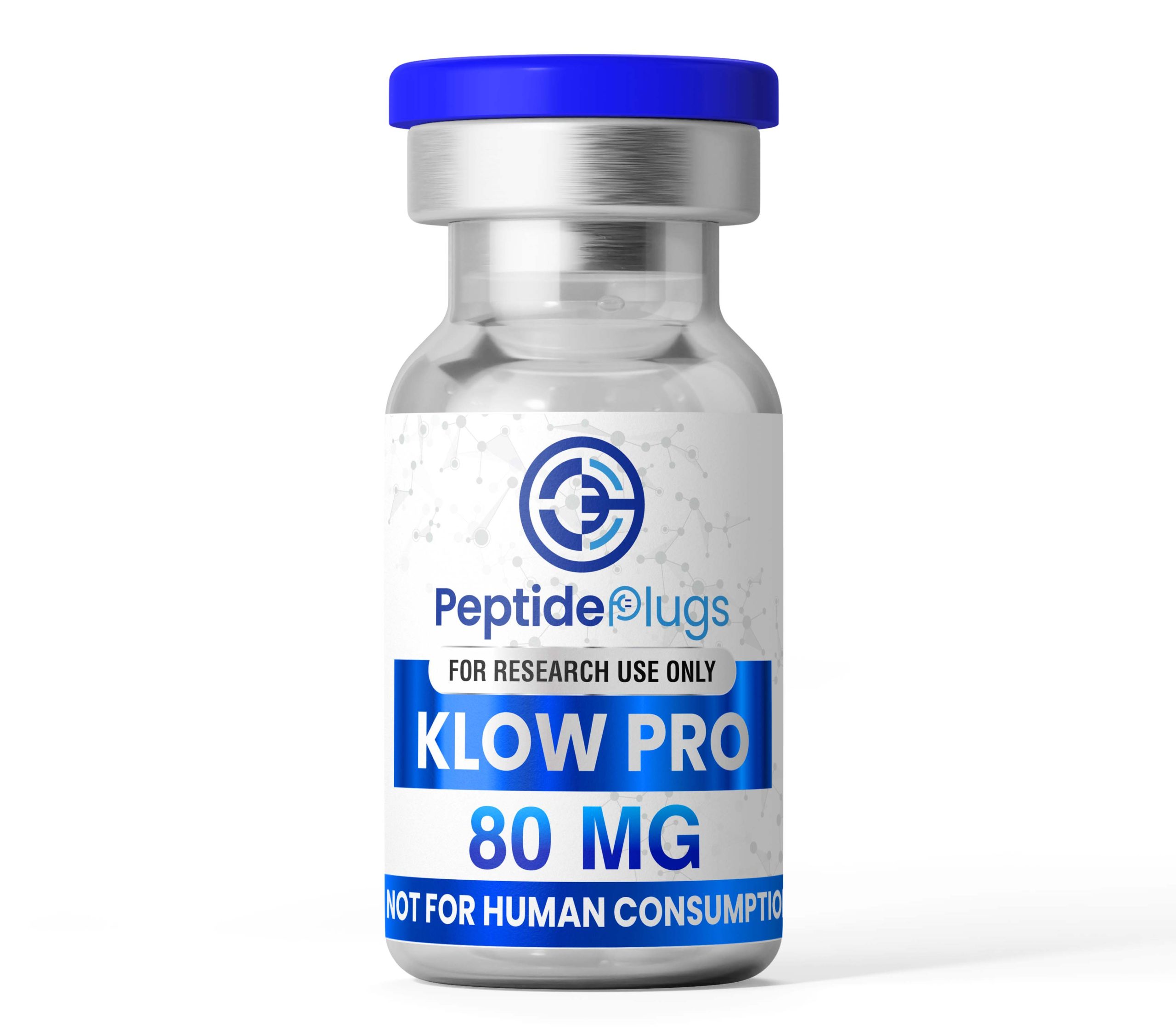
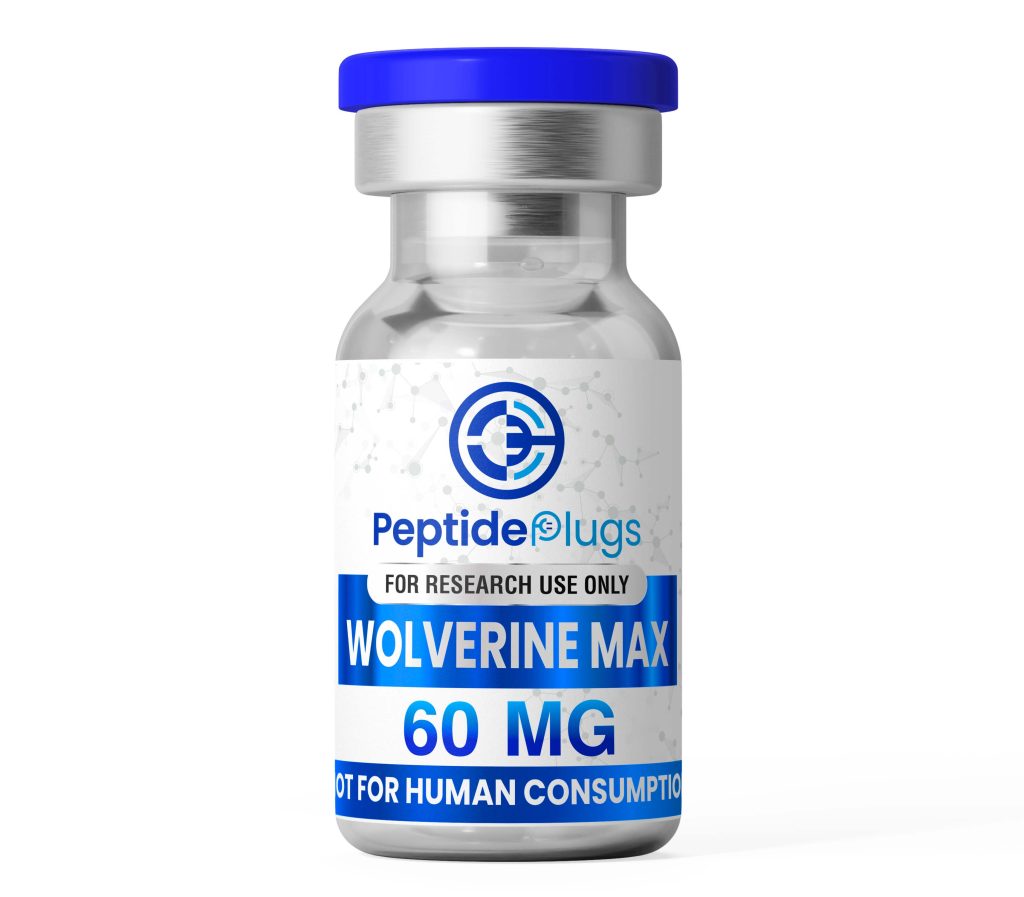
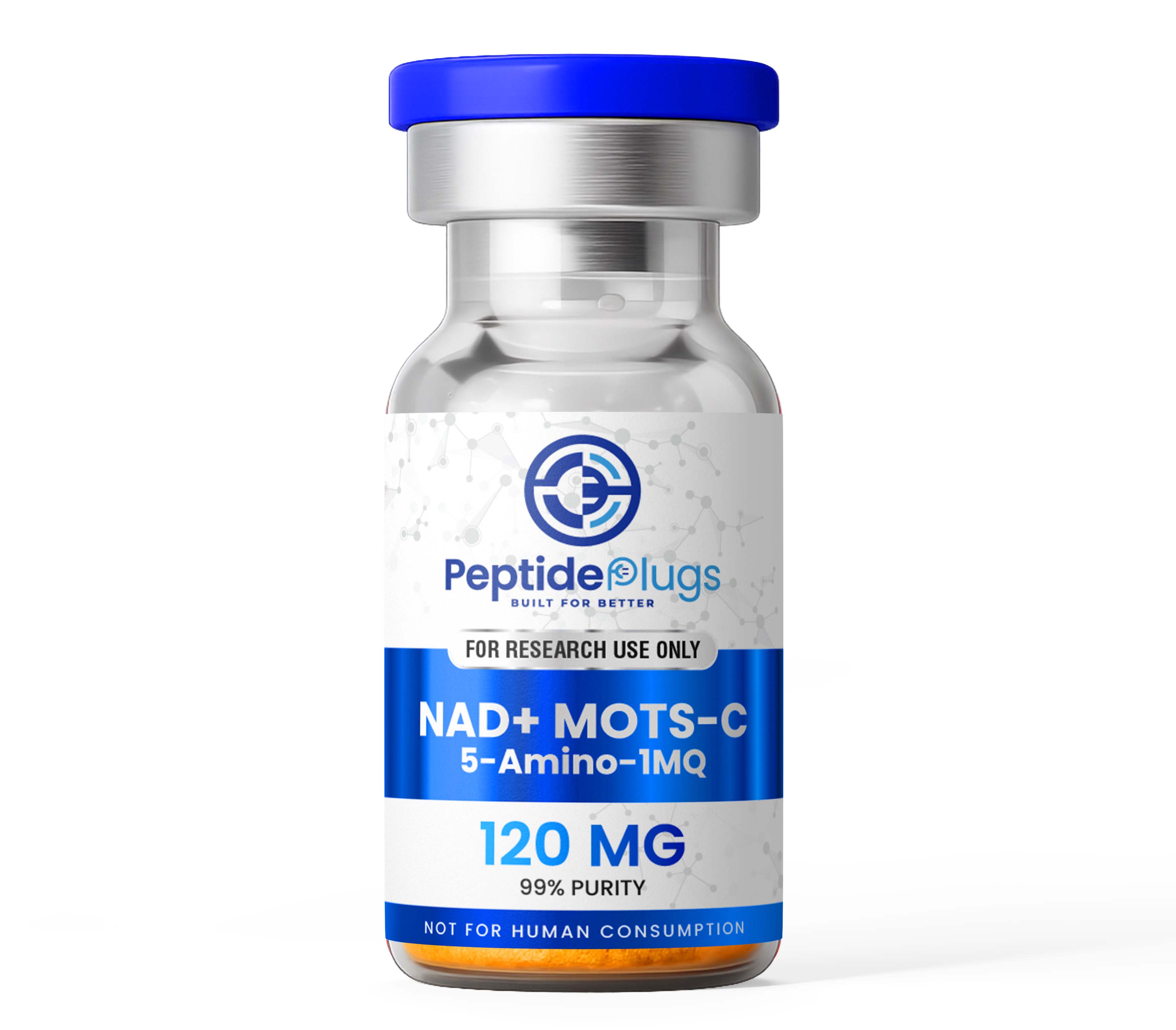
The Wolverine stack, turned up, with a cartilage peptide leading the vial.
A 60mg pre-mixed blend of Cartalax, BPC-157, TB-500, and KPV. Wolverine Plus covers tendon, soft tissue, and inflammation. Max keeps all three of those peptides, gives each one 20% more, and adds a 24mg lead dose of Cartalax, the bioregulator tripeptide studied for cartilage and the connective tissue around joints. Third-party tested, with the COA on this page.
One cartilage signal. Two repair workhorses. One inflammation layer. One vial.
Wolverine Max is the Wolverine Plus formula with a fourth peptide out in front. BPC-157 and TB-500 remain the repair workhorses, one local and one systemic. KPV remains the inflammation layer. Cartalax is the addition, and it is the reason for the name: a tissue-specific bioregulator mapped to cartilage, the slowest-healing tissue in the recovery picture and the one the original three peptides do not directly address. The 2:1:1:1 split puts Cartalax at a full 24mg, above its own 20mg single vial, with the three Plus peptides each at 12mg.
Twice the peptide of Wolverine Plus, and none of it is padding. Six of the extra 30mg go to the three original peptides so each one steps up, and the other 24mg are the cartilage peptide the Plus formula never had. If your research question stops at tendon, muscle, and gut, Plus is the tighter vial. If it runs into the joint itself, this is the one.
What Each Compound Brings
Cartalax is a synthetic tripeptide of alanine, glutamic acid, and aspartic acid (Ala-Glu-Asp) from the short-peptide bioregulator tradition, a body of research built on the idea that very short sequences act as tissue-specific signals for the cells they correspond to. Cartalax maps to cartilage and connective tissue. Its research centers on chondrocytes, the cells that produce and maintain cartilage, and fibroblasts, the cells that build the collagen framework around them, with studied areas including chondrocyte activity and proliferation, expression of extracellular matrix components, and connective tissue maintenance in aging tissue models. It is not a growth factor and not a repair peptide in the BPC-157 sense. It is a regulatory signal, and in this blend it is the reason the formula reaches tissue the other three do not.
BPC-157 is a partial sequence derived from a protective protein found in gastric juice. Animal research has explored its effects on tendon-to-bone healing, ligament repair, muscle tear models, and gastrointestinal integrity. The proposed mechanisms include angiogenesis (new blood vessel formation), upregulation of growth factors like VEGF and EGF, and modulation of nitric oxide pathways. It works largely at the site of injury, which is why it forms one half of the core repair pairing.
TB-500 is a synthetic version of the active region of Thymosin Beta-4, a peptide involved in cell migration and tissue repair. It binds G-actin and regulates the cytoskeletal dynamics that govern how cells move into and remodel damaged tissue. Unlike BPC-157, TB-500 acts systemically and over a longer time course, which is why the two are so often paired. One covers the local site, the other covers the broader system.
KPV is a three-amino-acid fragment (lysine-proline-valine) derived from the C-terminal of alpha-melanocyte-stimulating hormone (alpha-MSH). Where BPC-157 and TB-500 drive repair, KPV works in the opposite direction, dialing down inflammatory signaling. It has been studied for its ability to suppress the NF-kB pathway and downregulate pro-inflammatory cytokines such as TNF-alpha, IL-1beta, and IL-6, with the strongest research base in gastrointestinal and mucosal tissue. KPV does not build new tissue. It governs the inflammatory environment that tissue repair happens in.
Four peptides means four lines to read. A blend COA is only useful if it resolves each component, so ours is run as a component test: Cartalax, BPC-157, TB-500, and KPV each report their own peak and their own share of the vial, and the split is documented rather than assumed from the label.
Cartalax is the one to check first. At three amino acids it is the smallest peptide in the vial and the one most vendors would not bother to quantify separately. On a Wolverine Max COA it carries its own line.
Two peptides build, one peptide calms, one peptide signals the cartilage to maintain itself. Recovery covered from the muscle down to the joint surface, in a single formulation.
What's in the Vial
One lyophilized vial containing 24mg Cartalax, 12mg BPC-157, 12mg TB-500, and 12mg KPV pre-blended, for a total of 60mg active peptide. Reconstitute with bacteriostatic water. Component-tested for purity by third-party HPLC analysis. COA available on this product page.
- The complete Wolverine Plus formula, with every peptide stepped up from 10mg to 12mg
- Cartalax added at a 24mg lead as a cartilage-specific regulatory signal the original stack lacks
- BPC-157 contributes localized tissue healing and angiogenic signaling
- TB-500 contributes systemic cell migration and connective tissue remodeling
- KPV contributes inflammatory pathway modulation and mucosal-tissue effects
- Muscle, tendon, ligament, gut, and cartilage covered from one reconstitution
- 60mg total active peptide per vial, twice the Plus formula
- Pre-mixed eliminates the four-vial, four-draw step
Why This Ratio
Wolverine Max uses a 2:1:1:1 split, and the weighting is about what kind of peptide Cartalax is. BPC-157, TB-500, and KPV are researched in comparable amount ranges, so they stay even with one another, as they do in Wolverine Plus. Each moves up to 12mg so that adding a fourth peptide never dilutes the three the stack is built on. Cartalax belongs to a different research tradition. Bioregulator tripeptides are supplied and studied at larger amounts, which is why Cartalax ships on its own as a 20mg vial where BPC-157 ships at 10mg, and a cartilage signal sized like a repair peptide would be underweighted for the tissue it targets. The 24mg lead gives Cartalax more than its single-vial amount, so the joint-focused half of the formula is as fully supplied as the soft-tissue half. The result is a vial where each peptide draws at the amount its own literature is built on.
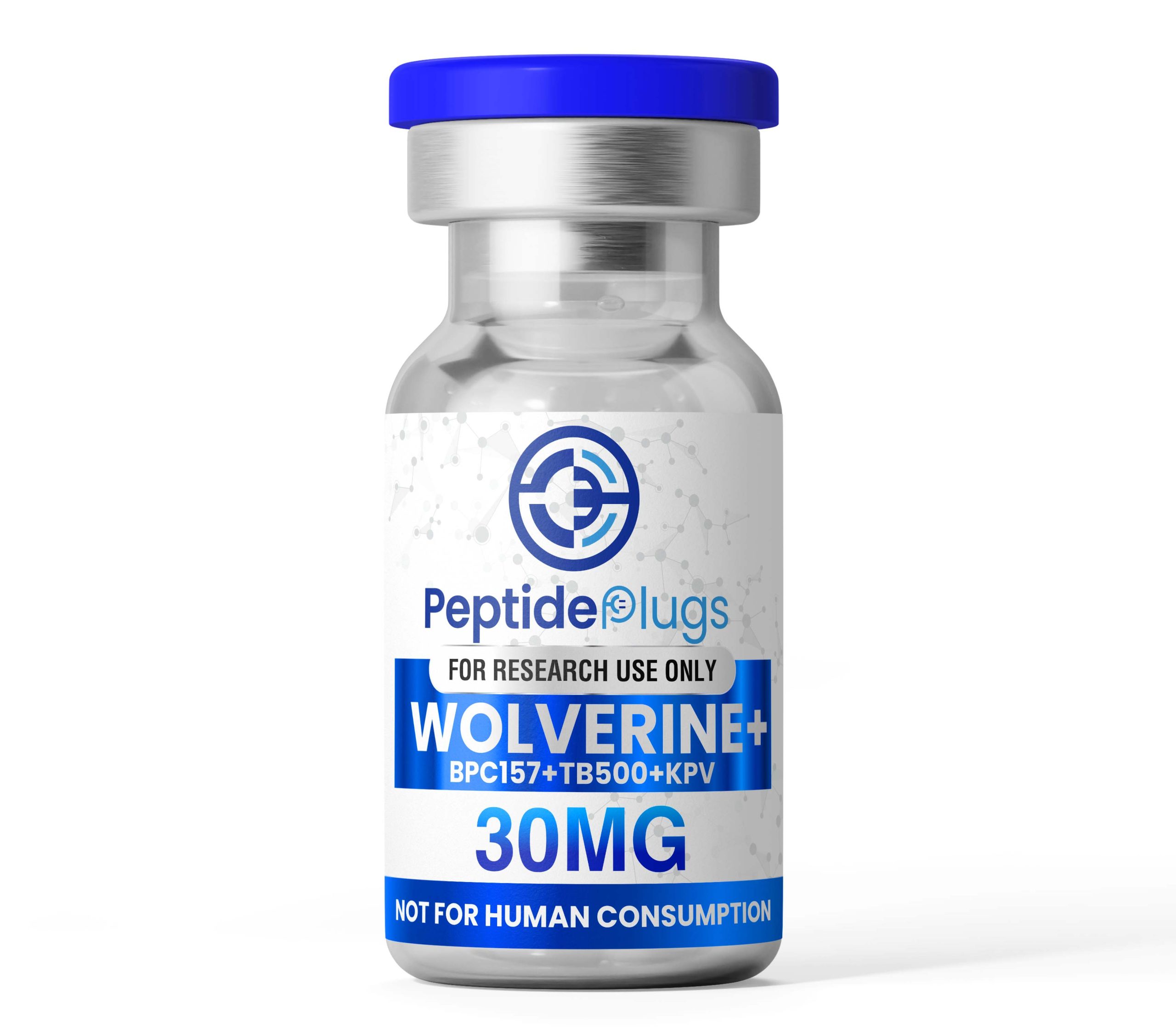
Same three repair-and-calm peptides without the cartilage layer. The tighter vial for tendon, muscle, and gut research that does not reach the joint.
Shop Wolverine Plus →About the Name
"Wolverine" is community shorthand for the BPC-157 and TB-500 pairing, named for the combination's association with fast, aggressive tissue recovery. "Plus" marked the first addition to that pairing, KPV, and a new inflammation-control dimension. "Max" is the ceiling of the line: everything in Plus, turned up, and a fourth peptide that carries recovery into the joint. Cartalax takes its own name from cartilage, the tissue it was developed around, so the full formula reads the way it works. The naming convention gives researchers one consistent handle for the four-peptide combination rather than describing it from scratch each time.
Research Context
Each of the four peptides has its own body of preclinical research, and the four bodies are not the same size. TB-500 and Thymosin Beta-4 have been studied since the 1980s and BPC-157 since the 1990s, with the deepest literature of the group. KPV is more recently characterized, with most of its data from inflammatory and gastrointestinal models. Cartalax comes from the short-peptide bioregulator tradition, a decades-long but specialized research lineage whose data is largely cell culture and tissue models of chondrocyte and fibroblast behavior, and whose literature is smaller and more self-contained than the others. None of the four are FDA-approved for human use, and combination research at the four-peptide level is community-driven rather than formally published. Researchers using Wolverine Max are operating ahead of the formal evidence base on the blend itself, even though each individual peptide has its own established literature.
Stacking Notes
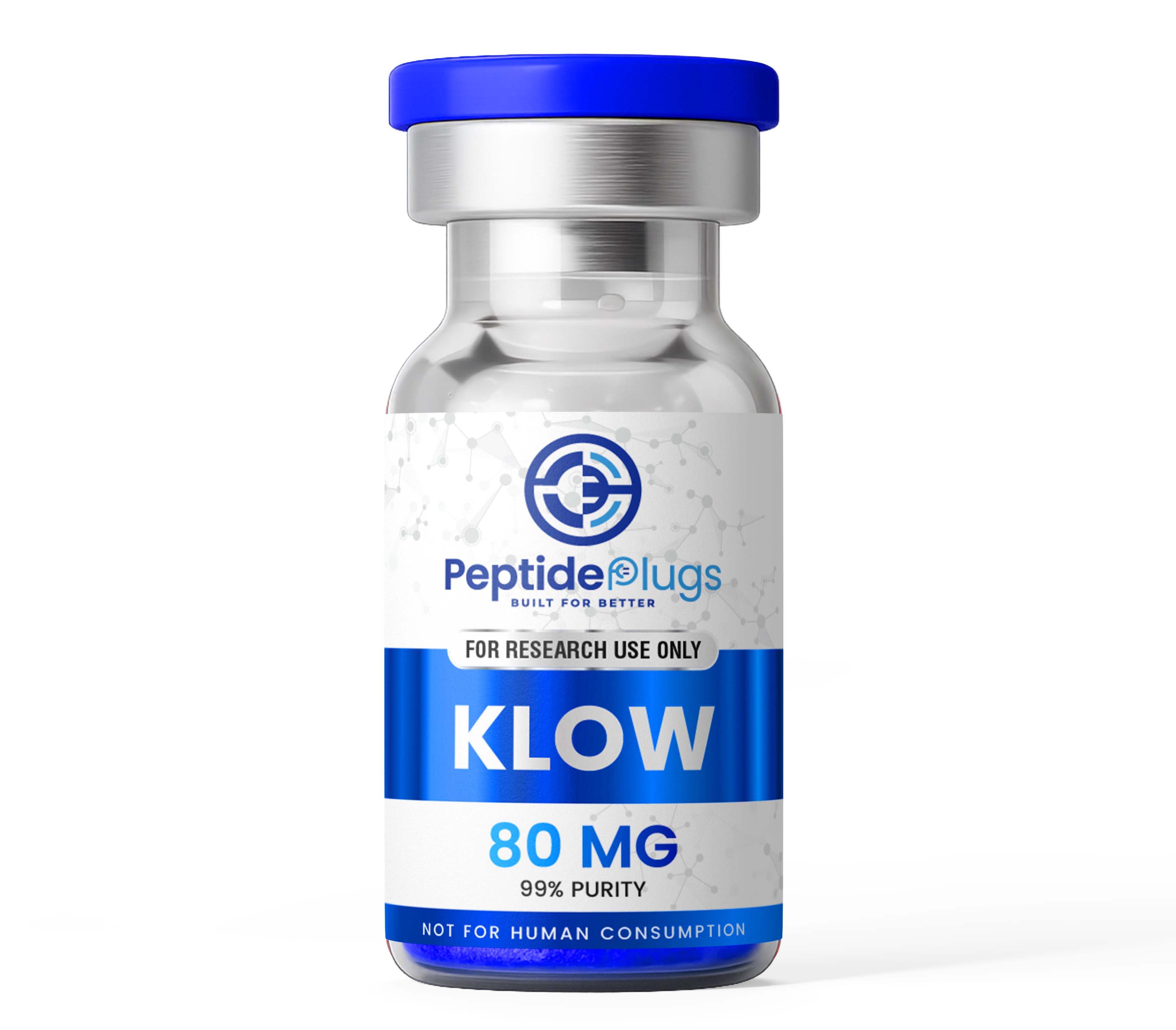
Wolverine Max is already a complete four-peptide recovery stack and is rarely combined further. Researchers extending it most often add GHK-Cu for collagen and connective tissue effects, which pushes the formulation toward a KLOW-style blend with a cartilage layer. Others reach for additional bioregulators, such as Chonluten or Testagen, when the research design spans multiple tissue systems, or for GH-axis peptides (Tesamorelin, Ipamorelin, CJC-1295) for broader anabolic context. No published data exists on Wolverine Max combined with other compounds.
Storage
Store the lyophilized product refrigerated and away from light. Keep sealed and protected from moisture until use. After reconstitution, keep refrigerated and use within the period indicated on the product label. Do not freeze.
- 24mg Cartalax + 12mg BPC-157 + 12mg TB-500 + 12mg KPV
- 60mg total active peptide per vial
- Four-mechanism recovery research blend
- Cartalax-led 2:1:1:1 split
- Every Wolverine Plus peptide stepped up to 12mg
- Cartilage and connective tissue layer the Plus formula lacks
- Single reconstitution, single draw
- Component-tested, third-party HPLC
- COA available on product page
- Not FDA approved
- Lyophilized for shelf stability