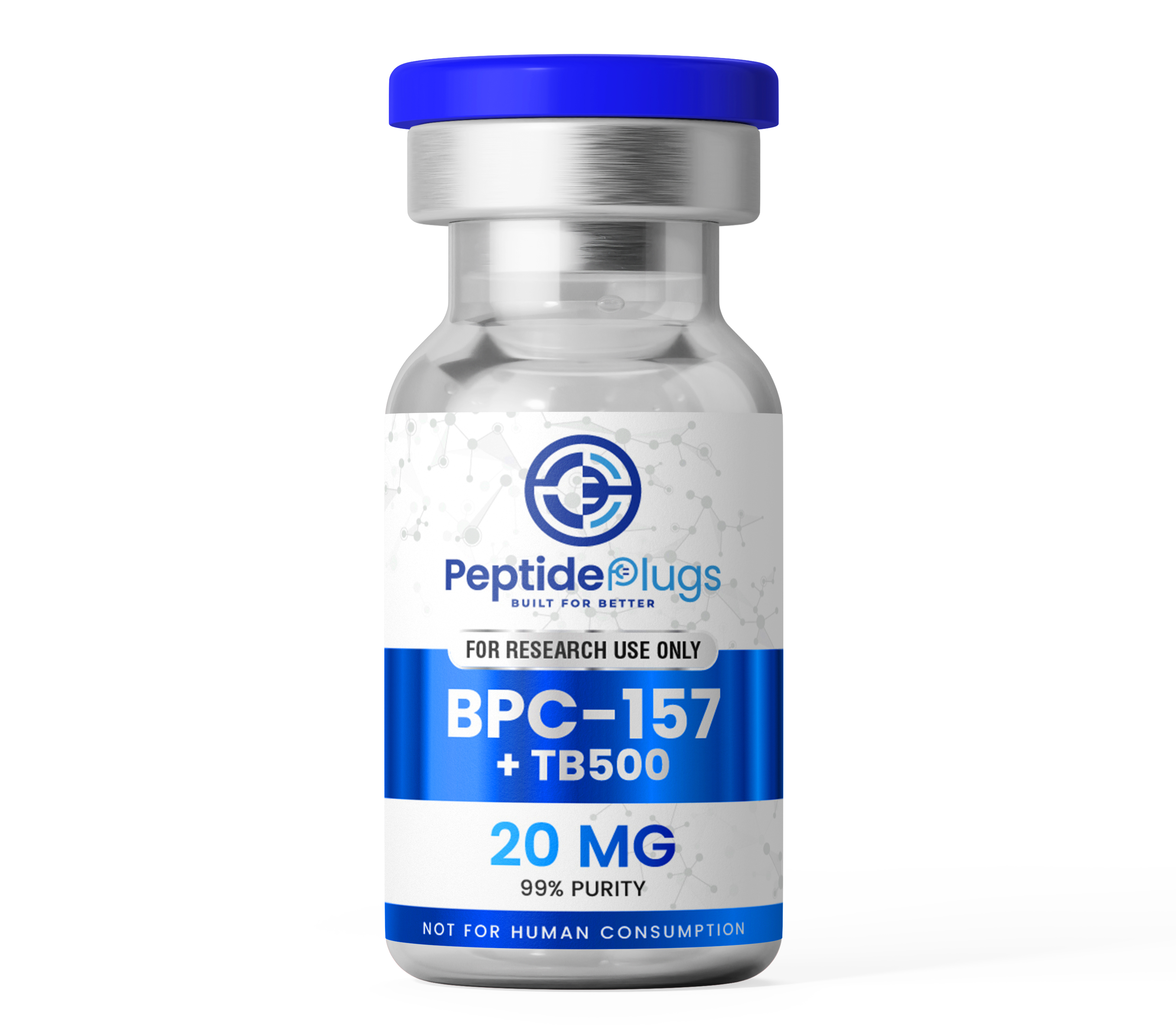
Two repair anchors. Two support peptides. The ultimate KLOW.
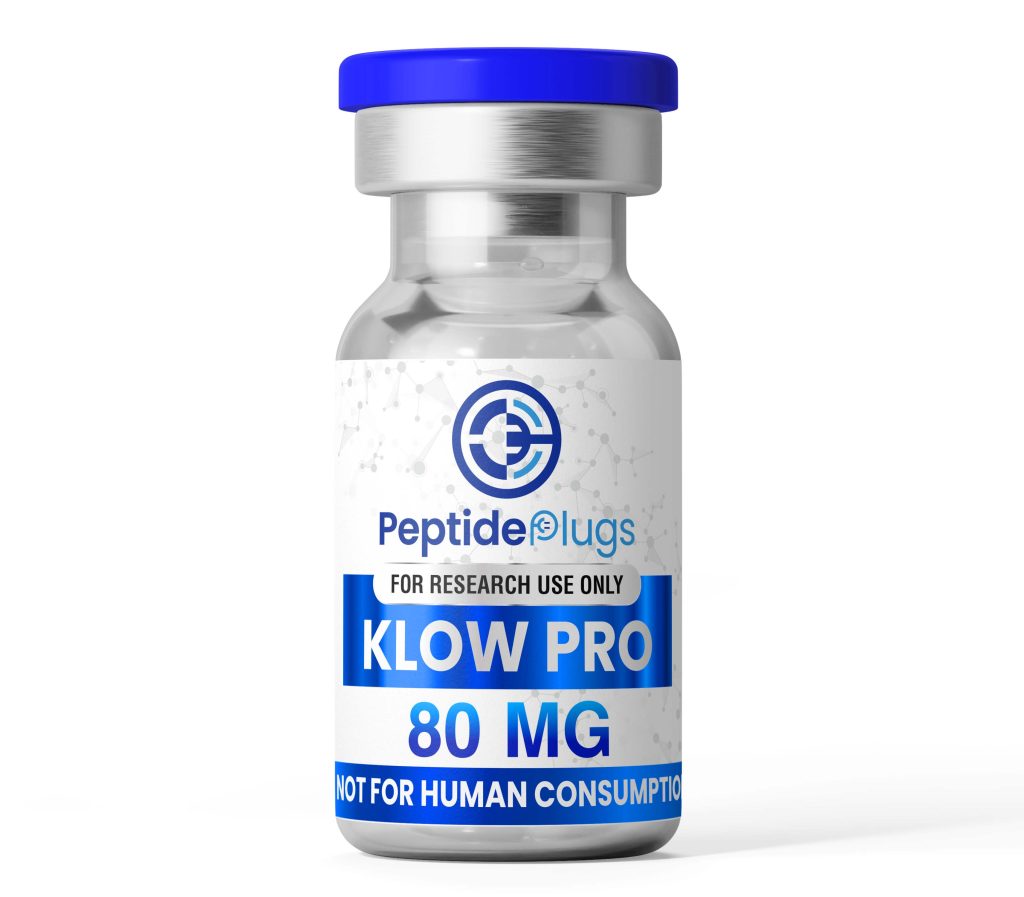
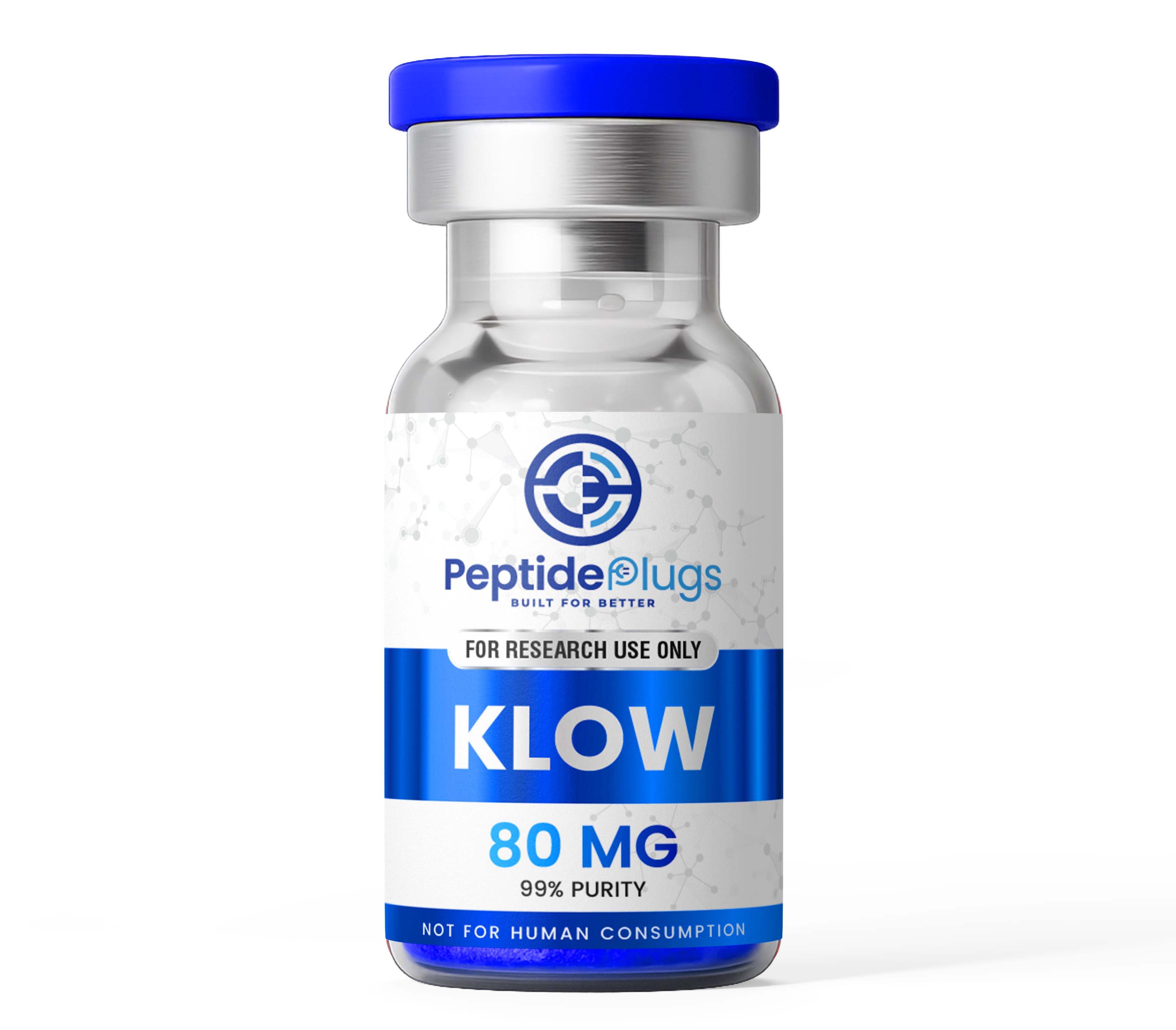
A standard KLOW is copper-dominated, with GHK-Cu holding the majority of the vial and the repair peptides riding along in small shares. KLOW Pro flips the hierarchy. BPC-157 and TB-500 are doubled to 20mg each and installed as the anchors of the formula, the compounds the whole vial is built around. GHK-Cu moves into a support role alongside KPV, forming a 40mg inflammatory-support layer that calms and conditions the tissue environment while the anchors do the repair work. Same four peptides as the classic KLOW. Completely different chain of command.
What Each Compound Brings
BPC-157 is a fifteen-amino-acid fragment of a protective protein found in gastric juice, and one of the most broadly researched repair peptides in existence. Its literature spans tendon, ligament, muscle, bone, nerve, and gastrointestinal injury models, with proposed mechanisms including angiogenesis, growth factor modulation, and nitric oxide pathway effects. At 20mg it is the first of the two anchors this formulation is built around.
TB-500 is the synthetic version of the active fragment of thymosin beta-4, a peptide involved in actin regulation and cell migration. Its research base centers on tissue recovery, flexibility, and repair in muscle and connective tissue models, and it is the classic pairing partner for BPC-157 in recovery research. At 20mg it is the second anchor, completing the 40mg repair core.
GHK-Cu is a copper-bound tripeptide that occurs naturally in human plasma and declines with age. Most researchers know it as a beauty peptide, but its literature runs deeper than skin: it has been studied for anti-inflammatory and antioxidant activity, modulation of the genes involved in tissue repair, and remodeling of the extracellular matrix that healing tissue is rebuilt on. In KLOW Pro it is deliberately cast in that second role. At 30mg it works the support side, quieting oxidative and inflammatory stress and conditioning the matrix while the anchors handle the structural repair.
KPV is a three-amino-acid fragment of alpha-melanocyte-stimulating hormone studied for suppression of NF-kB signaling and downregulation of pro-inflammatory cytokines such as TNF-alpha, IL-1beta, and IL-6. It is the second half of the support layer, pairing with GHK-Cu to govern the inflammatory environment the repair peptides are working in. It does not build tissue, and at its focused 10mg share it does not need to.
Four peptides means four lines to read. A blend COA is only useful if it resolves each component, so ours is run as a component test: BPC-157, TB-500, GHK-Cu and KPV each report their own peak and their own share of the vial, and the split is documented rather than assumed from the label.
Check the milligram figure on each line against the label: BPC-157 20mg, TB-500 20mg, GHK-Cu 30mg, KPV 10mg. The smallest peptide in the vial is the one most vendors skip, so read that line first.
Two anchors repair. Two support peptides calm and condition the environment they repair in. Four pathways working the same recovery problem.
What's in the Vial
One lyophilized vial containing 20mg BPC-157, 20mg TB-500, 30mg GHK-Cu, and 10mg KPV pre-blended, for a total of 80mg active peptide. Tested for purity by third-party HPLC analysis. COA available on this product page.
Why This Ratio
The classic KLOW split is built around GHK-Cu, and for a maintenance and beauty focus that makes sense: the copper peptide is the star, and the repair peptides are a supporting cast at small shares. The problem shows up when researchers try to use that formula for serious recovery work. Because the repair peptides are tied to a copper-dominated ratio, pushing BPC-157 and TB-500 to meaningful research amounts means dragging the whole blend up with them. The copper share becomes the limitation on the entire formula.
KLOW Pro removes that limitation by inverting the hierarchy. BPC-157 and TB-500 are the anchors, doubled to 20mg each, the forward amounts their acute recovery research is built on. GHK-Cu is recast in its support role at 30mg, contributing the anti-inflammatory, antioxidant, and matrix-conditioning side of its literature rather than headlining as a beauty peptide, and KPV joins it at 10mg to complete the inflammatory-support layer. Every peptide sits at the amount its role actually calls for. The result is a formulation for acute, aggressive recovery research, where the standard copper-led KLOW remains the maintenance and beauty option.
About the Name
KLOW is the community's name for this four-peptide combination, assembled from the compounds inside it, and it has become the shorthand for the category itself. The Pro designation marks what this version changes: a professional-grade rebuild that promotes the repair peptides to anchors and moves the copper peptide into support. Standard KLOW is the maintenance and beauty formula. KLOW Pro is the recovery formula, and the name tells researchers exactly which side of that line this vial sits on.
Research Context
Each of the four peptides in KLOW Pro carries its own substantial research base. BPC-157 and TB-500 are the two most studied repair peptides in the research community, GHK-Cu has decades of literature spanning both regeneration and anti-inflammatory activity, and KPV has a growing body of anti-inflammatory work across skin, mucosal, and gastrointestinal models. The four-peptide combination itself, and this anchor-and-support ratio in particular, is community-driven rather than formally published. None of these compounds is FDA-approved for human use, and researchers using KLOW Pro are operating ahead of the formal evidence base on the blend, even though each individual peptide carries established literature.
Stacking Notes
KLOW Pro is designed to be a complete repair-and-recovery stack on its own, which is the reason for the pre-mixed format and the anchor-and-support structure. Researchers extending it most often add GH-axis peptides for a broader regenerative context, or run standard KLOW as the follow-on maintenance formulation once the acute phase of a recovery model is finished. No published data exists on KLOW Pro combined with other compounds.
Storage
Store the lyophilized product refrigerated and away from light. Keep sealed and protected from moisture until use. Do not freeze.