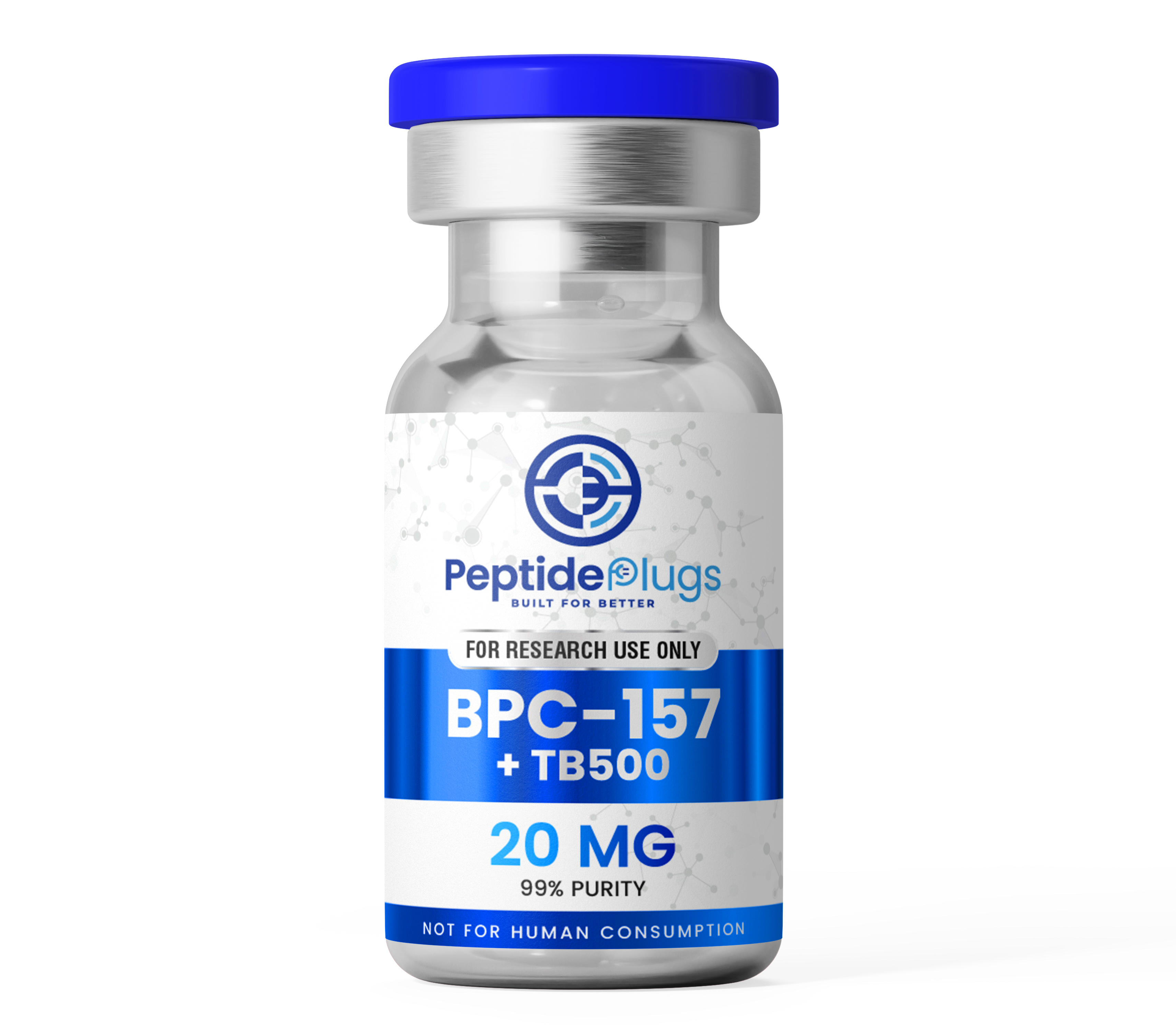
BPC-157 + TB-500. Two of the most-researched recovery peptides. One vial.
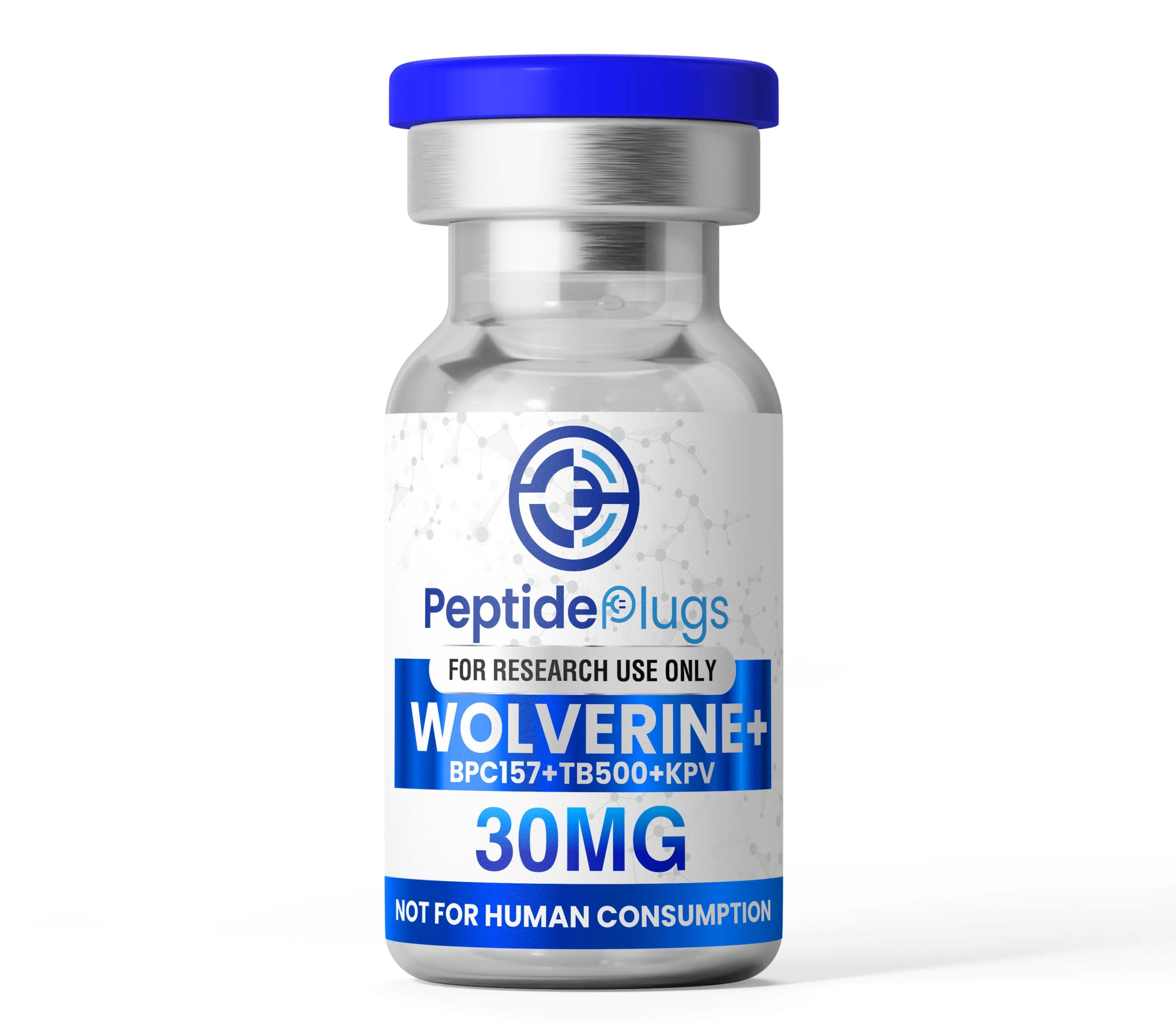
A 20mg pre-mixed blend pairing 10mg BPC-157 with 10mg TB-500 — the combination researchers nicknamed the Wolverine Stack for its reputation in soft tissue, tendon, and connective tissue recovery models.
Ten of the 30mg vial at 40% off run $540, which is $54 a vial and $1.80 per milligram. The ladder is 2 vials 5%, 3+ vials 10%, 5-pack 25%, 10-pack 40%, off the single-vial price, applied in the cart. Any mixed box of ten vials across sizes or products takes 25% off.
Two peptides. Two different recovery mechanisms. One stack.
BPC-157 and TB-500 hit recovery from two different angles. BPC-157 is fast-acting and works largely at the site of injury through angiogenic and growth factor pathways. TB-500 is slower, more systemic, and works through actin sequestration and cellular migration. The community paired them long before the formal research caught up — and the nickname stuck because the combination became the default reference point for soft tissue research protocols.
What Each Compound Does
BPC-157 is a partial sequence derived from a protective protein found in gastric juice. Animal research has explored its effects on tendon-to-bone healing, ligament repair, muscle tear models, and gastrointestinal integrity. The proposed mechanisms include upregulation of growth factors (VEGF, EGF), promotion of angiogenesis (new blood vessel formation), and modulation of nitric oxide pathways. It's most commonly researched for localized tissue repair where it acts on the area near where it's administered.
TB-500 is a synthetic version of a 17-amino-acid region of Thymosin Beta-4, a naturally occurring peptide involved in cell migration and tissue repair. The active fragment binds G-actin, regulating cytoskeletal dynamics that govern how cells move into and remodel damaged tissue. Unlike BPC-157, TB-500 travels systemically and is researched in models involving cardiac tissue, hair follicle regeneration, and broad connective tissue repair.
Where BPC-157 acts locally and quickly, TB-500 acts systemically and over a longer time course. The community-discovered combination uses both at the same time.
Two peptides means two lines to read. A blend COA is only useful if it resolves each component, so ours is run as a component test: BPC-157 and TB500 each report their own peak and their own share of the vial, and the split is documented rather than assumed from the label.
Check the milligram figure on each line against the label. The smallest peptide in the vial is the one most vendors skip, so read that line first.
Local action and systemic action, converging on the same downstream goal.
What's in the Vial
One lyophilized vial containing 10mg BPC-157 and 10mg TB-500 pre-blended, for a total of 20mg active peptide. Reconstitute with bacteriostatic water. Tested for purity by third-party HPLC analysis. COA available on this product page.
- Two distinct, non-overlapping recovery mechanisms in a single vial
- BPC-157 contributes localized tissue healing and angiogenic signaling
- TB-500 contributes systemic cellular migration and connective tissue remodeling
- Pre-mixed eliminates the two-vial reconstitution and double-draw step
- The community-validated pairing now referred to as the Wolverine Stack
- One of the most widely-referenced peptide blends in soft tissue research
Why This Ratio
An even 10:10 split is the standard for this blend because both peptides are researched at broadly comparable absolute amounts in the literature. Unlike GHRH/GHRP blends where the ratio matters more, BPC-157 and TB-500 are typically discussed in similar ranges, which makes the 1:1 split the natural choice. The 20mg total gives researchers a meaningful working amount of each compound per vial.
About the Nickname
"The Wolverine Stack" isn't a clinical term. It's what the peptide research community started calling this specific combination, named after the Marvel character known for his accelerated healing. The nickname stuck because BPC-157 and TB-500 together became the default starting point for anyone researching soft tissue recovery protocols. The science doesn't care about the nickname, but the community shorthand has made it easier for researchers to find each other and compare notes on a specific, consistent pairing.
Research Context
BPC-157 has been studied predominantly in rodent models since the 1990s, with research published on tendon healing, ligament repair, muscle injury, and gastrointestinal protection. TB-500 / Thymosin Beta-4 has been studied since the 1980s with research spanning cardiac repair, wound healing, neural regeneration, and corneal injury models. Neither peptide is FDA-approved for human use. The body of work is preclinical and exploratory, and human clinical data is limited.
Stacking Notes
The blend is itself a stack. Researchers occasionally pair it further with compounds operating on different systems — GHK-Cu for skin and copper-mediated repair pathways, or GH-axis peptides like Tesamorelin/Ipamorelin for broader anabolic context. No published data exists on three-way stacks. Researchers using extended combinations are operating well ahead of the formal evidence base.
Storage
Lyophilized: store refrigerated, away from light. After reconstitution: keep refrigerated, use within 30 days. Do not freeze reconstituted product.
- 10mg BPC-157 + 10mg TB-500 pre-blended
- 20mg total active peptide per vial
- Dual-pathway recovery research blend
- Single reconstitution, single injection
- Community-named "Wolverine Stack"
- Third-party HPLC tested
- COA available on product page
- Lyophilized for shelf stability