What It Is
L-Carnitine is a naturally occurring compound derived from amino acids. It is studied for its established role in transporting fatty acids into the mitochondria, where they are used for energy.
How It Works
L-Carnitine's established biological role is shuttling fatty acids across the mitochondrial membrane so they can be broken down for energy. This transport function is the focus of its research interest.
One compound, one line to read. The certificate on this page is run on the lot in the vial: an HPLC purity figure for L-Carnitine, with the chromatogram behind it. Read the purity line, then check the lot number against the label.
Every lot is tested before it is listed, and the certificate is replaced when a new lot goes on the shelf.
Its established role: shuttling fatty acids into mitochondria for energy.
Research Context
L-Carnitine is a well-characterized metabolic compound with an established role in energy metabolism and a long research history.
What's in the Vial
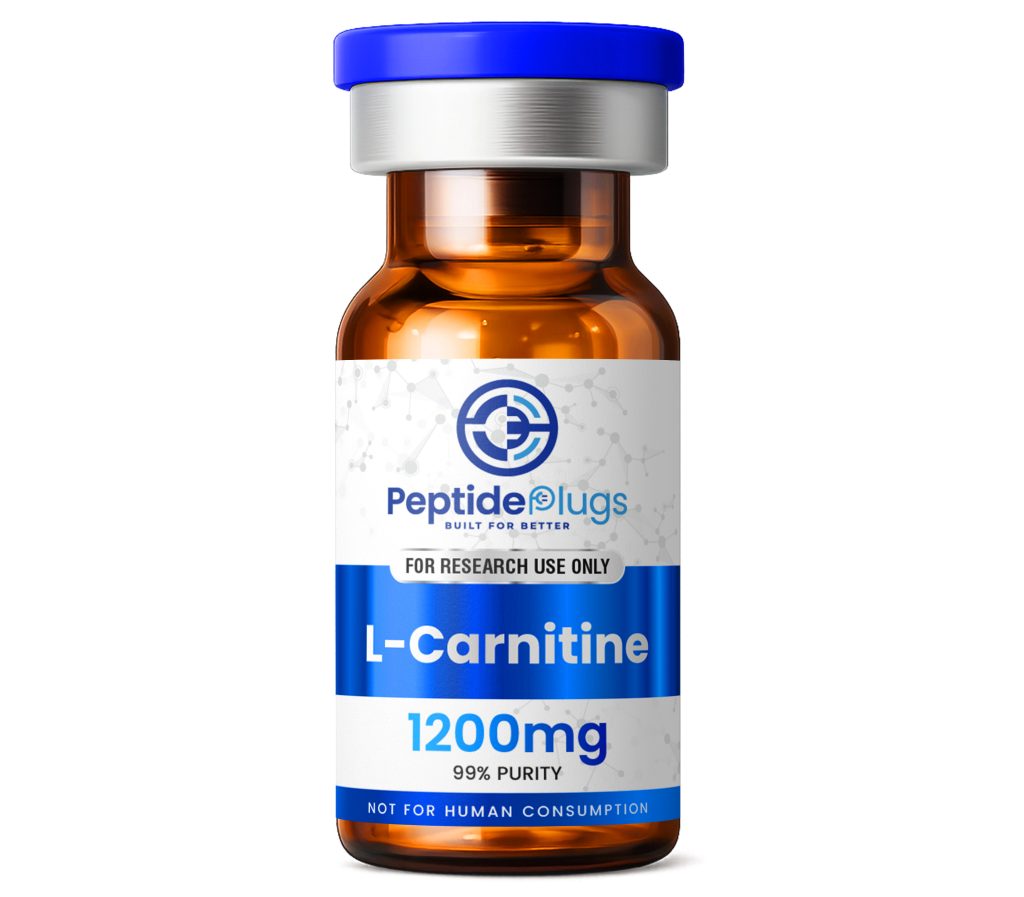
One vial of L-Carnitine 1200mg supplied as a ready-to-use liquid — no reconstitution required. Supplied for laboratory research use.
Storage
Store away from direct light. Refrigerate once punctured and keep the vial sealed when not in use.