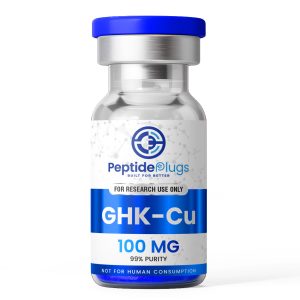
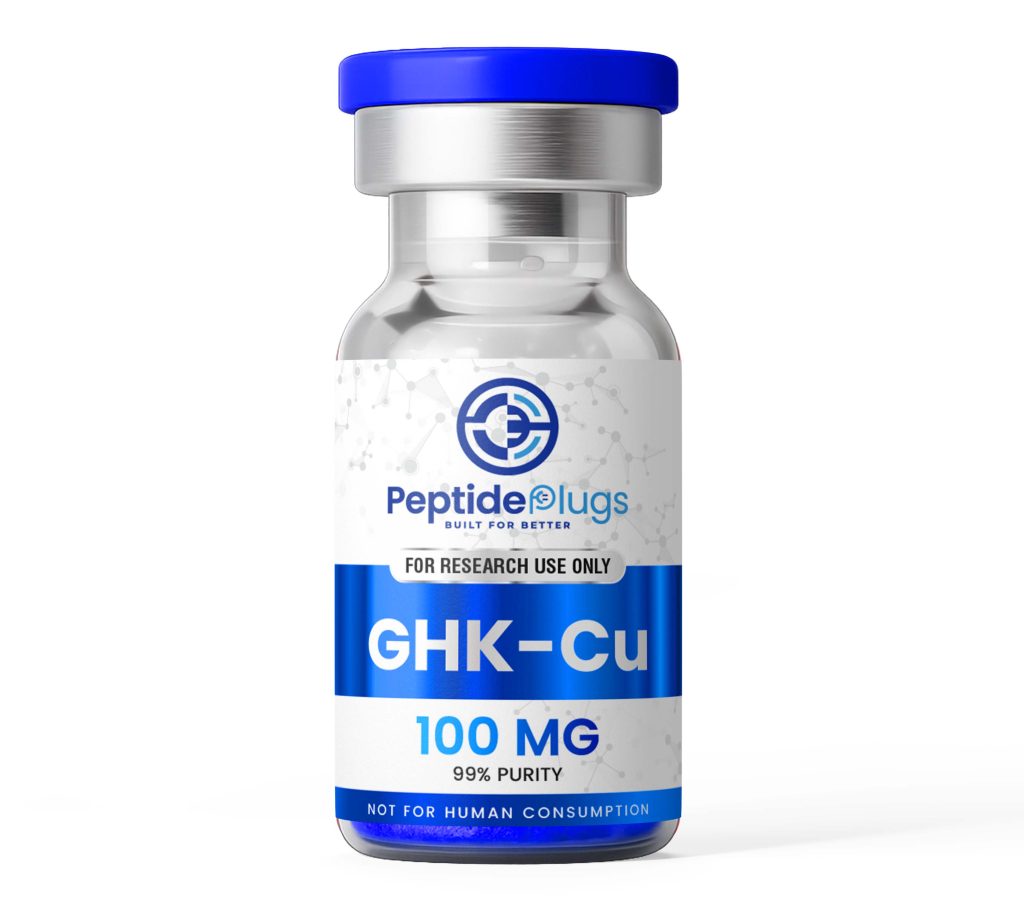
 GHK-Cu 100mg
$40
206 in stock
✓ Third-party tested·✓ 99%+ Purity·✓ Same-day UPS Air Express
Same-day fulfillment from Texas · Ships free over $200 · Secure credit card checkout
Call or text 512-960-7885

 Lab tested 99.84% pure
For laboratory and research use only. Not for human or veterinary use, not a drug, food, or cosmetic.
GHK-Cu is a naturally occurring copper-binding tripeptide, one of the most-studied compounds in skin and tissue-research literature.
GHK-Cu is a tripeptide (glycine-histidine-lysine) bound to a copper ion. It occurs naturally in human plasma and is one of the most extensively studied peptides in skin-research and tissue-remodeling literature.
GHK-Cu binds copper, a cofactor for many tissue-related enzymes. Research examines its role in signaling associated with collagen production and extracellular-matrix remodeling, primarily in skin-research models.
The peptide binds a copper ion, a cofactor studied in tissue-signaling research.
GHK-Cu has a large preclinical and cosmetic-research literature and is a standard reference compound in skin and tissue-remodeling studies.
One lyophilized vial containing 100mg of GHK-Cu 100mg, supplied for laboratory research use. Reconstitute with bacteriostatic water.
Lyophilized: store refrigerated, away from light. After reconstitution: keep refrigerated and use within the period indicated on the product label. Do not freeze reconstituted product.
Don't have an account yet? Sign up
No items in your cart. Go on, fill it up with something you love!
Start Shopping NowTap below to open your messaging app and text us directly.
Open MessagesText us anytime at the number below — or use the contact form on this page.
Save it to your phone and send us a text.
GHK-Cu 100mgGHK-Cu 100mgThe statements on this website have not been evaluated by the U.S. Food and Drug Administration. All products sold by Austin Research Products LLC (d/b/a PeptidePlugs) are intended strictly for laboratory research and development purposes only. These compounds are not drugs, supplements, or cosmetics, and are not intended to diagnose, treat, cure, or prevent any disease. Austin Research Products LLC (d/b/a PeptidePlugs) is a research material supplier - we are not a compounding pharmacy or compounding facility as defined under Section 503A of the Federal Food, Drug, and Cosmetic Act, nor an outsourcing facility as defined under Section 503B. Products are not for human or animal consumption. By purchasing from this site, you confirm you are a qualified researcher or licensed professional and accept full responsibility for the safe handling, storage, and use of all materials in compliance with applicable laws and regulations.