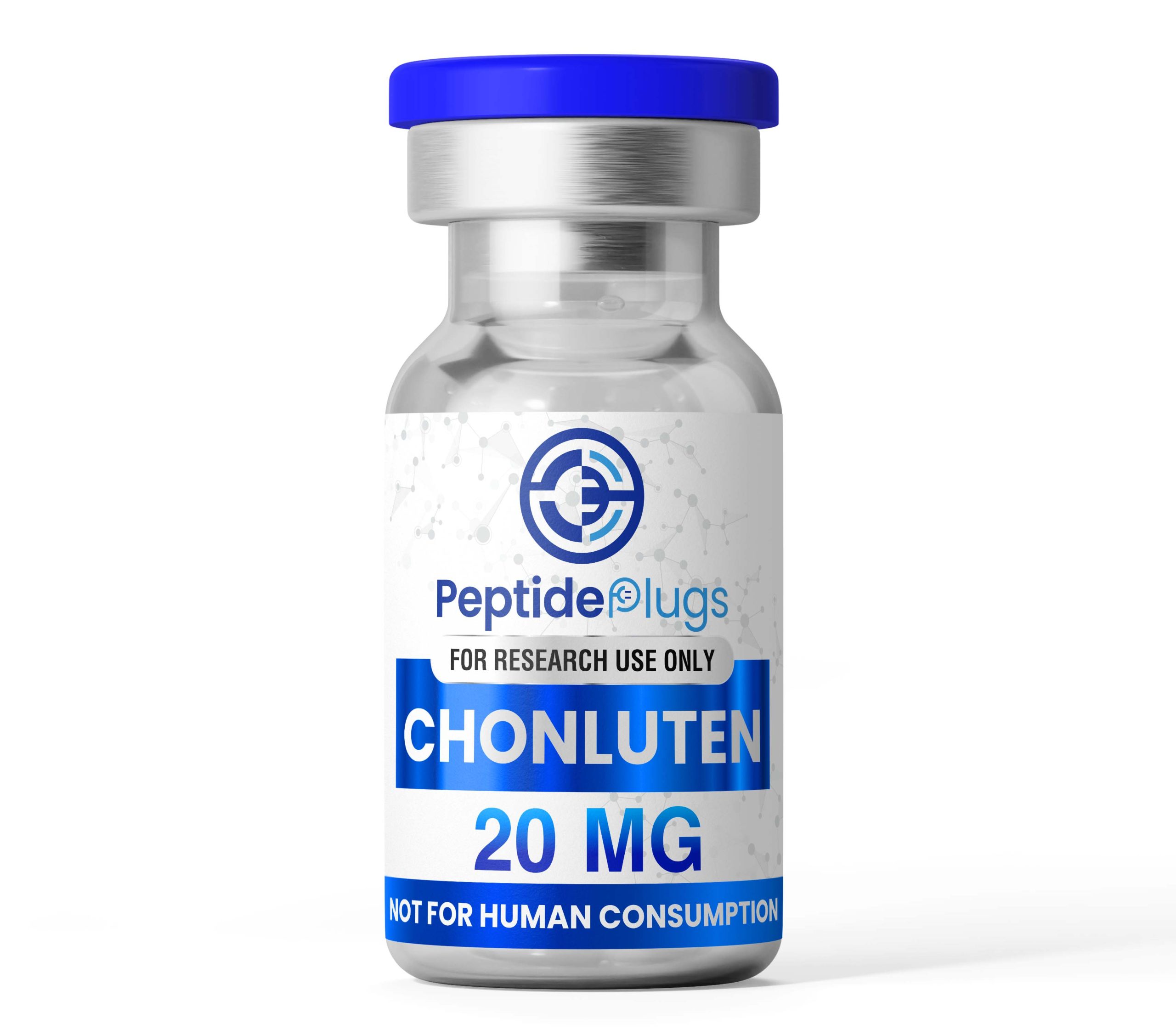
Chonluten. The Glu-Asp-Gly tripeptide bioregulator directed at the lungs and bronchial tissue.
A 20mg lyophilized vial of Chonluten (L-glutamyl-L-aspartyl-glycine), a short peptide bioregulator from the Khavinson program, researched for its influence on bronchial epithelium, respiratory tissue, and gene expression in lung-aging models.
One tripeptide. One target tissue. One vial.
Chonluten is a three-amino-acid peptide (glutamic acid-aspartic acid-glycine) developed at the St. Petersburg Institute of Bioregulation and Gerontology as a short-peptide bioregulator directed at respiratory tissue. Where the wider bioregulator family covers many organ systems, Chonluten is the member studied specifically in the context of the lungs and bronchial epithelium.
What Chonluten Brings
Chonluten is a synthetic tripeptide composed of L-glutamic acid, L-aspartic acid, and glycine (Glu-Asp-Gly). It belongs to the class of short peptide bioregulators developed by Professor Vladimir Khavinson and colleagues, a research program built around isolating the minimal active peptide sequences responsible for tissue-specific regulatory effects. Within that framework, Chonluten is the sequence assigned to the respiratory system, which is why its research base concerns lung and bronchial tissue.
The proposed mechanism of the short peptide bioregulators is distinctive. Rather than acting primarily on cell-surface receptors, this class is studied for its ability to enter the cell, reach the nucleus, and interact directly with DNA to influence gene expression, an epigenetic mode of action. In Chonluten's case, the research literature explores effects on genes tied to bronchial epithelial function and lung tissue maintenance, offering a proposed account of how a compact tripeptide could produce measurable respiratory effects.
Across Khavinson-era preclinical work, Chonluten has been examined for support of the bronchial epithelium and lung tissue, antioxidant and protective activity in respiratory models, and geroprotective (anti-aging) endpoints framed around respiratory decline. It is one of the tissue-specific reference compounds cited when researchers discuss the short-peptide bioregulator hypothesis.
One compact tripeptide studied across respiratory, genomic, and geroprotective research lines.
What's in the Vial
One lyophilized vial containing 20mg of Chonluten (Glu-Asp-Gly tripeptide), with no blend and no additional compounds. Tested for purity by third-party HPLC analysis. COA available on this product page.
- A single, well-defined tripeptide, not a blend, for clean study design
- The respiratory-designated member of the Khavinson bioregulator family
- Primary research base in bronchial epithelium and lung tissue
- Studied for an epigenetic, gene-expression mode of action rather than surface signaling
- Explored for antioxidant and geroprotective endpoints framed around respiratory aging
- Compact Glu-Asp-Gly sequence, a reference compound for the bioregulator hypothesis
- 20mg of a single, well-defined compound per vial
About the Name
"Chonluten" is the original research designation given to the Glu-Asp-Gly tripeptide by the St. Petersburg group that developed it. The name traces directly back to the primary literature, where Chonluten appears alongside sibling bioregulators such as Vilon, Vesugen, and Epithalon, each assigned to a different target tissue. Using the original name keeps a researcher's references aligned with the published body of work rather than introducing a new label.
Research Context
Chonluten emerged from the short peptide bioregulator research program led by Vladimir Khavinson and the St. Petersburg Institute of Bioregulation and Gerontology. The literature is concentrated in respiratory biology and gerontology and is predominantly preclinical, with a substantial share originating from the founding research group itself. Chonluten is not approved by the FDA for human use, and independent replication outside the original research lineage remains limited. Researchers working with Chonluten are engaging a compound with a defined sequence and a specific but still-maturing evidence base.
Stacking Notes
Within the bioregulator research literature, Chonluten is most often discussed alongside its tissue-specific siblings, Vilon (immune), Vesugen (vascular), and Epithalon (pineal), reflecting the framework the class was built around. Researchers exploring the short-peptide hypothesis frequently reference these compounds together to compare mode of action across different target tissues. No published data exists on Chonluten combined with modern synthetic peptides outside this bioregulator family.
Storage
Store the lyophilized product refrigerated and away from light. Keep sealed and protected from moisture until use. Do not freeze.
- 20mg Chonluten (Glu-Asp-Gly tripeptide) per vial
- Single-peptide bioregulator, no blend
- Glu-Asp-Gly · L-glutamyl-L-aspartyl-glycine sequence
- Khavinson short-peptide research lineage
- Respiratory-designated bioregulator
- Proposed epigenetic, gene-expression mechanism
- Single-vial, single-compound format
- Third-party HPLC tested
- COA available on product page
- Lyophilized for shelf stability