Same-day UPS Air Express from Texas · Ships free over $200 · Overnight option available
Call or text 770-335-0683

Same-day UPS Air Express from Texas · Ships free over $200 · Overnight option available
Call or text 770-335-0683
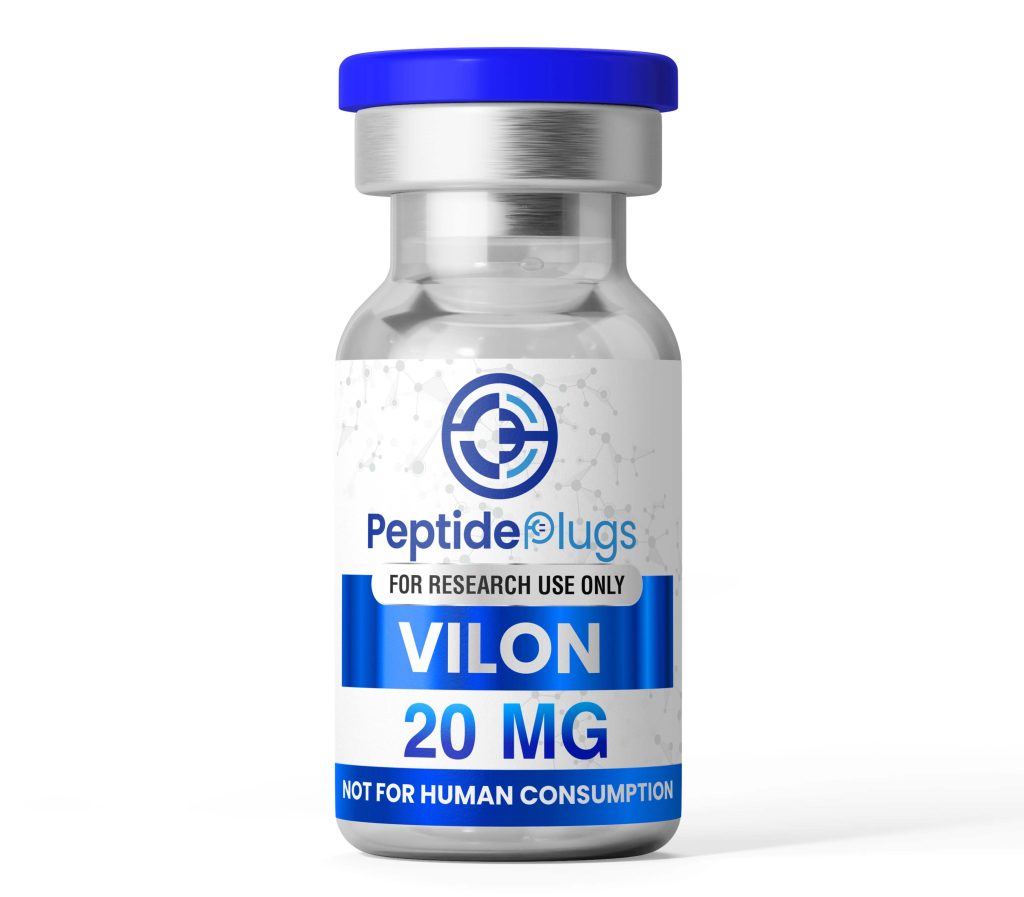
For laboratory and research use only. Not for human or veterinary use, not a drug, food, or cosmetic.
A 20mg lyophilized vial of Vilon (L-lysyl-L-glutamic acid), one of the shortest and most-studied peptide bioregulators, researched for its influence on thymus function, cellular immunity, and gene expression in aging models.
Vilon is a two-amino-acid peptide (lysine-glutamic acid) developed at the St. Petersburg Institute of Bioregulation and Gerontology as a synthetic short-peptide analog of thymus-derived bioregulators. Where larger peptide preparations act broadly, Vilon is studied as a compact, targeted signaling molecule. Its research base sits primarily in immunology and gerontology rather than tissue repair.
Vilon is a synthetic dipeptide composed of L-lysine and L-glutamic acid (Lys-Glu). It belongs to the class of short peptide bioregulators developed by Professor Vladimir Khavinson and colleagues, a research program that set out to isolate the minimal active peptide fragments responsible for the regulatory effects of larger tissue extracts. Vilon is regarded as a synthetic counterpart to the thymus bioregulator lineage, which is why the bulk of its research base concerns immune function.
The proposed mechanism of the short peptide bioregulators is unusual. Rather than acting primarily on cell-surface receptors, this class of peptides is studied for its ability to enter the cell, reach the nucleus, and interact directly with DNA to influence gene expression, an epigenetic mode of action. In Vilon's case, the research literature has explored effects on the expression of genes involved in immune and cellular regulation, offering a proposed explanation for how so small a molecule could exert measurable biological effects.
Across Khavinson-era preclinical work, Vilon has been examined for restoration of T-cell and thymus-linked immunity in aging animal models, modulation of cellular and humoral immune responses, and geroprotective (anti-aging) endpoints including life-span studies in rodents. It is one of the reference compounds researchers cite when discussing the short-peptide bioregulator hypothesis as a whole.
One compact dipeptide studied across immune, genomic, and geroprotective research lines.
One lyophilized vial containing 20mg of Vilon (Lys-Glu dipeptide), with no blend and no additional compounds. Tested for purity by third-party HPLC analysis. COA available on this product page.
"Vilon" is the original research designation given to the Lys-Glu dipeptide by the St. Petersburg group that developed it. Unlike community nicknames coined for peptide stacks, Vilon's name traces directly back to the primary literature, where it appears alongside sibling bioregulators such as Epithalon and Thymogen. Using the original name keeps a researcher's references aligned with the published body of work rather than introducing a new label.
Vilon emerged from the short peptide bioregulator research program led by Vladimir Khavinson and the St. Petersburg Institute of Bioregulation and Gerontology, with most published work dating from the late 1990s and 2000s. The literature is concentrated in immunology and gerontology and is predominantly preclinical, with a substantial share originating from the founding research group itself. Vilon is not approved by the FDA for human use, and independent replication outside the original research lineage remains limited. Researchers working with Vilon are engaging a compound with a defined sequence and a specific but still-maturing evidence base.
Within the bioregulator research literature, Vilon is most often discussed alongside Epithalon (the pineal/telomerase-linked bioregulator) and Thymogen (Glu-Trp), reflecting the "tissue-specific peptide" framework the class was built around. Researchers exploring the short-peptide hypothesis frequently reference these compounds together to compare mode of action across different target tissues. No published data exists on Vilon combined with modern synthetic peptides outside this bioregulator family.
Store the lyophilized product refrigerated and away from light. Keep sealed and protected from moisture until use. Do not freeze.
Don't have an account yet? Sign up
No items in your cart. Go on, fill it up with something you love!
Start Shopping NowTap below to open your messaging app and text us directly.
Open MessagesText us anytime at the number below — or use the contact form on this page.
Save it to your phone and send us a text.