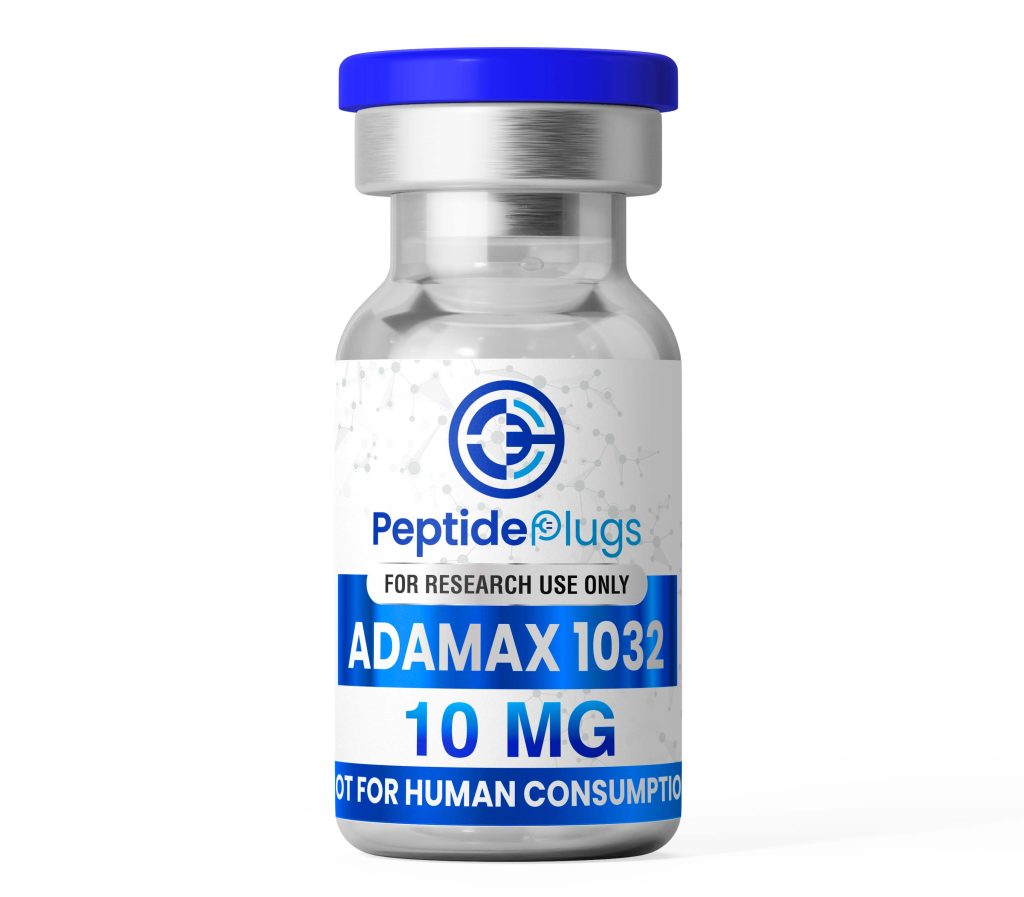
The adamantylated Semax analog. The full structure, labeled by mass.
Adamax takes the Semax core and adds the adamantane cage that gives the compound its name. We carry two Adamax SKUs and label both by mass: Adamax 984, which is essentially N-acetyl Semax, and this one, the full 1032 Da adamantylated structure. Third-party tested, with the COA on this page.
Purity tells you the vial is mostly one thing. Mass tells you which thing. Plenty of vendors sell the 984 under the Adamax name with no distinction. We sell both, and each one confirms on its own mass line. Read that line on any Adamax COA before you read the purity line.
What Adamax 1032 Is
Adamax is a synthetic analog built on the Semax heptapeptide, Met-Glu-His-Phe-Pro-Gly-Pro, which is itself derived from the ACTH 4-10 fragment with the hormonal activity engineered out. The 1032 Da structure carries three changes to that core: an N-terminal acetyl cap, a C-terminal amide, and an adamantyl-modified glycine borrowed from the P021 design. The formula commonly given is C50H69N11O11S at roughly 1032.23 g/mol. The adamantane cage is the defining feature. It is the same bulky, lipophilic group found in the adamantane class of small molecules, and in P021 it is the piece credited with making a short peptide survive longer and behave better across the blood-brain barrier. Adamax applies that idea to Semax. It is not FDA approved.
How It Differs From Semax
Semax is the parent compound and by far the most studied member of the family, with decades of literature behind it. Its research profile centers on brain-derived neurotrophic factor, with animal work showing rapid increases in BDNF and TrkB signaling in the hippocampus, along with attention, memory, and neuroprotection models. The catch is durability. Semax is a plain, uncapped seven-residue peptide, so it is exposed to peptidases at both ends and has a short working window. Adamax 1032 keeps the Semax core intact so the same pathways are in play, then caps both termini and adds the adamantyl group specifically to address that stability problem. The trade-off is evidence: what is documented about mechanism belongs to Semax, and what is claimed for Adamax is inferred from Semax plus the known chemistry of adamantane and P021. There is no published preclinical study on Adamax itself. Researchers choosing it are choosing the structural argument, not a separate data set.
How It Differs From Adamax 984
We carry both, so here is the honest split. Adamax 984 is Ac-Met-Glu-His-Phe-Pro-Gly-Pro-Ala-Gly-OH: essentially N-acetyl Semax, extended with an alanine-glycine tail, at about 984 Da. The acetyl cap protects the N-terminus, which is a real improvement over plain Semax, and the structure stays close enough to the parent that the Semax literature maps onto it cleanly. What it does not have is the adamantane cage. Adamax 1032 starts from the same Semax core, caps both ends, and adds the P021-style adamantyl-glycine, which is the modification the Adamax name was built around and the one associated with lipophilicity and blood-brain barrier behavior. If your research question is about Semax with a longer working window, the 984 gets you there at a lower cost. If the question is specifically about the adamantylated design, this is the vial. Both COAs are on their own product pages, and the mass line tells you which one you are holding.
Look for the mass, not just the purity. An HPLC chromatogram can show 99% purity on a 984, a 1032, or plain Semax. It cannot tell them apart. Identity is settled by molecular weight and the observed mass spec peaks, which is why the 1032 versus 984 line matters more than the purity line on any Adamax COA.
Both of our Adamax SKUs carry their own COA on their own page. If you are comparing vendors, ask for the observed mass, not the label.
Same signaling rationale as Semax. Built to last longer once it gets there.
What's in the Vial
One lyophilized 10mg vial of Adamax 1032. Tested for purity by third-party HPLC analysis through Freedom Diagnostics, with the COA available on this product page.
- Full adamantylated structure, the design the Adamax name actually refers to
- Semax core preserved, so the BDNF and TrkB research rationale carries over
- Capped at both ends, plus the P021-style adamantyl-glycine for stability
- Roughly 1032 Da, distinguishable from our Adamax 984 on any mass spec
- Third-party tested, COA on this page
- Not FDA approved. For research use only
Research Context
The research base here belongs to Semax, and it is substantial: BDNF and TrkB expression, neuroprotection, attention and memory models, plus copper-chelation and antioxidant work in cell models. Adamax has no dedicated published study, preclinical or otherwise. Every claim about it is built by analogy from three sources: the Semax literature, the adamantane class of small molecules, and the P021 peptide that pioneered the adamantyl-glycine modification. That is a reasonable structural argument, and it is the reason the compound exists, but researchers should treat Adamax as a hypothesis-driven analog rather than a characterized compound. It is not FDA approved.
Stacking Notes
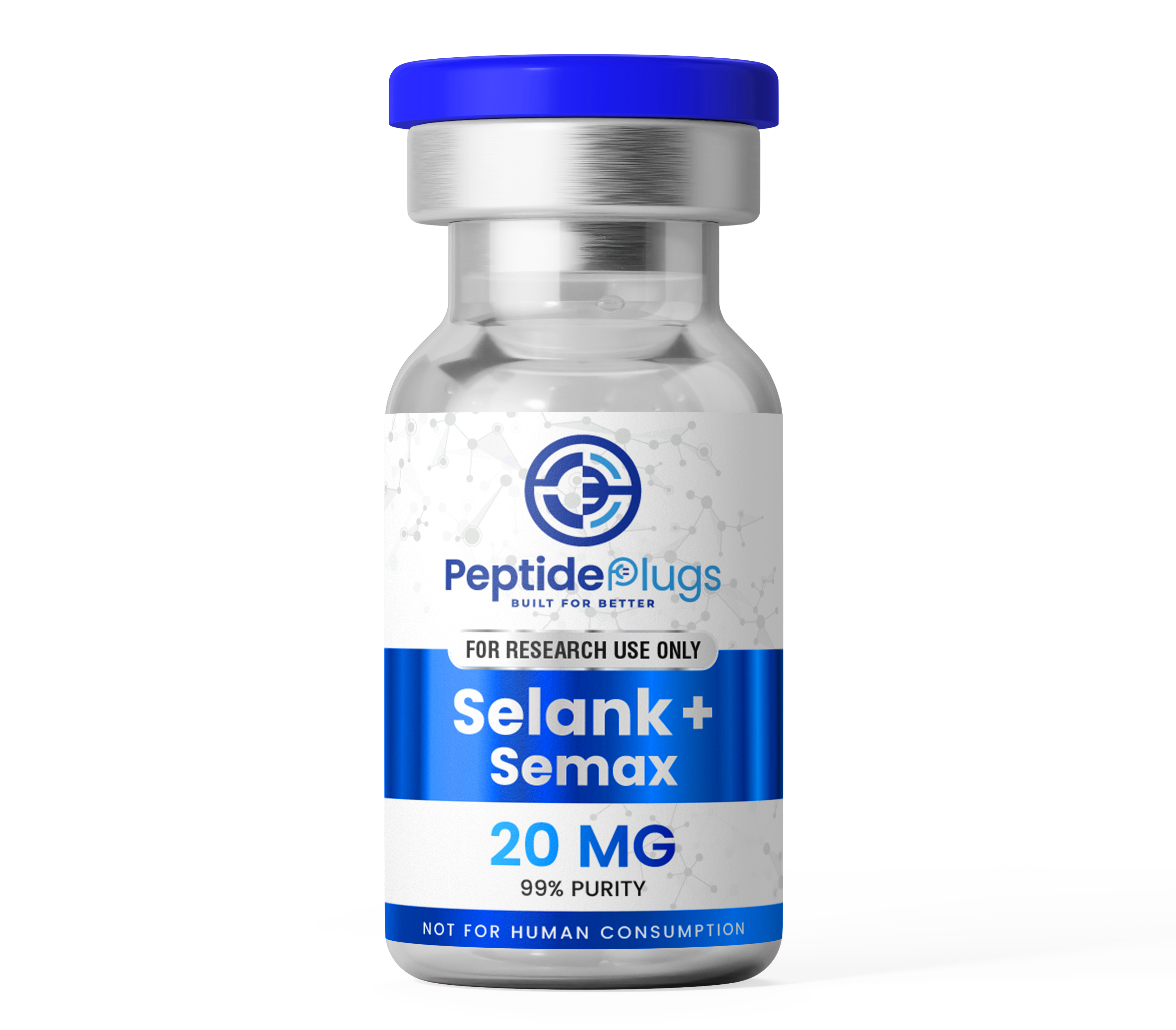
Adamax is typically studied on its own or alongside the compound it derives from. Some researchers run it next to Semax to compare the modified and unmodified structures directly, and others pair it with Selank, which is built on a different backbone entirely and is not a competing analog. No published data exists on Adamax in combination with other compounds.
Storage
Store the lyophilized product refrigerated and away from light. Keep sealed and protected from moisture until use. Do not freeze.
- Adamax 1032, the adamantylated Semax analog
- 10mg lyophilized vial
- Semax core: Met-Glu-His-Phe-Pro-Gly-Pro
- N-terminal acetyl, C-terminal amide
- P021-style adamantyl-glycine modification
- Approximately 1032 Da, C50H69N11O11S
- Sister SKU: Adamax 984, essentially N-acetyl Semax, also available
- Identity readable on the mass line of the COA
- Third-party HPLC tested
- COA available on product page
- Not FDA approved
- Lyophilized for shelf stability