The repair signal and the inflammation layer, with nothing else in the vial.
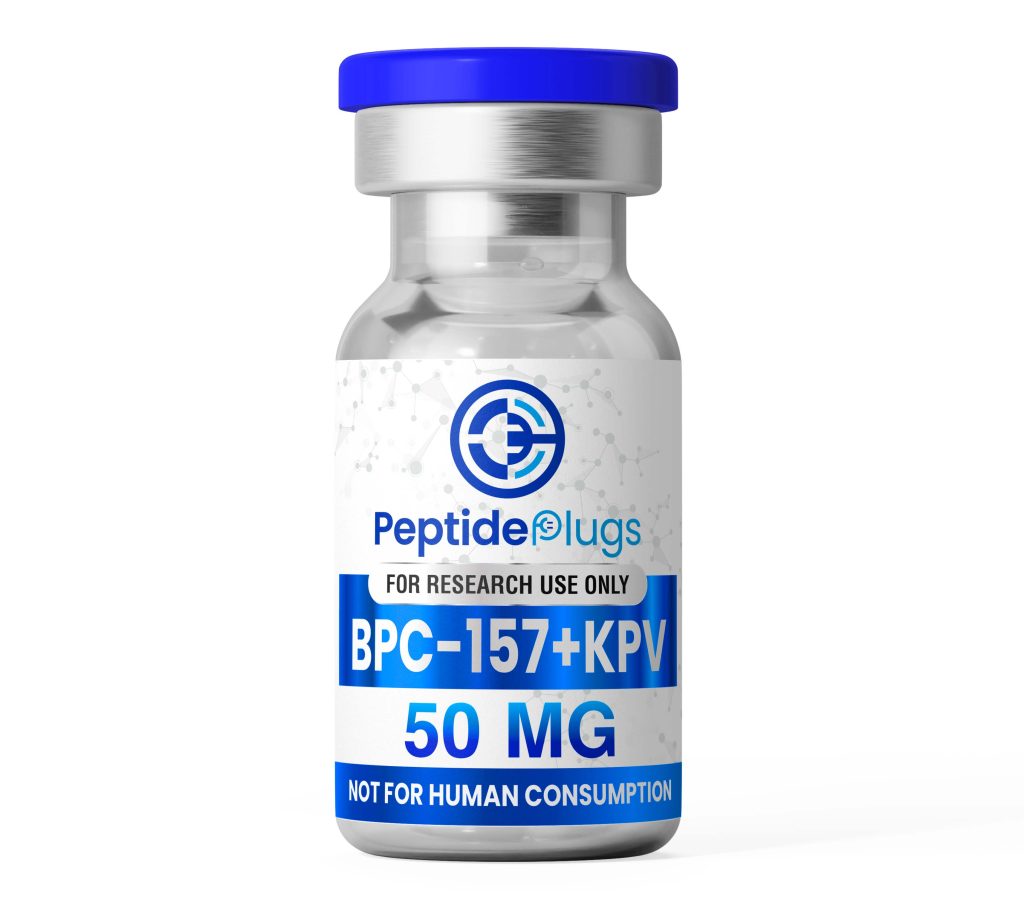
A 50mg pre-mixed blend of 30mg BPC-157 and 20mg KPV, weighted 3:2 toward the repair peptide. Half again the BPC-157 of our 20mg single, twice the KPV of our 10mg single, and the two of them pre-blended so each draw carries the same split. Labeled at 50mg and tested at 54.8mg: the lab measured every component over its labeled amount at 99.68% purity, and the certificate is on this page. Custom blended exclusively for PeptidePlugs, $90 for the vial where the same material as singles runs $145.
One repair workhorse. One inflammation layer. One vial.
This is the Wolverine Plus idea reduced to its two ends. BPC-157 is the repair signal, the peptide the whole recovery category is built around, and here it leads by amount as well as by role. KPV is the environment that repair happens in: it does not build tissue, it governs the inflammatory signaling around tissue that is being built. The systemic mover, TB-500, is left out on purpose. What remains is the pairing researchers reach for when the question is a local repair site, or the gut lining, where both of these peptides have their deepest research base.
Three vials from the lot went to the lab and each one came back over the label on both lines: BPC-157 between 32.4mg and 34.2mg against 30mg, KPV between 21.0mg and 21.8mg against 20mg. The 50mg on the label is the floor we guarantee, not the average the lab found. Identity confirmed by LC-MS, no fentanyl detected.
Twenty milligrams more peptide than Wolverine Plus, spent on two compounds instead of three. The whole increase goes to BPC-157 and KPV, so the repair signal is three times as strong and the inflammation layer is doubled. If your research needs the systemic cell-migration arm that TB-500 brings, Plus is the complete three-peptide vial. If it stops at the local site and the inflammatory environment around it, this is the one, at a BPC-157 amount no three-peptide blend of ours comes close to.
Priced off our singles by the milligram, 30mg of BPC-157 is $75 and 20mg of KPV is $70: $145 for the pair, and three or four vials to reconstitute. Buy this and you spend $90 for the same 50mg, pre-blended at 3:2 and weighed line by line on the certificate. That is 38% less for the same material: $1.80 per labeled milligram against $2.50 for BPC-157 alone and $3.50 for KPV alone, and $1.64 per milligram the lab actually found in the vial.
What Each Compound Brings
BPC-157 is a partial sequence derived from a protective protein found in gastric juice. Animal research has explored its effects on tendon-to-bone healing, ligament repair, muscle tear models, and gastrointestinal integrity. The proposed mechanisms include angiogenesis (new blood vessel formation), upregulation of growth factors like VEGF and EGF, and modulation of nitric oxide pathways. It works largely at the site of injury, which is why it is the most common lead peptide in recovery research and why it carries 60% of this vial.
KPV is a three-amino-acid fragment (lysine-proline-valine) derived from the C-terminal of alpha-melanocyte-stimulating hormone (alpha-MSH). Where BPC-157 drives repair, KPV works in the opposite direction, dialing down inflammatory signaling. It has been studied for its ability to suppress the NF-kB pathway and downregulate pro-inflammatory cytokines such as TNF-alpha, IL-1beta, and IL-6, with the strongest research base in gastrointestinal and mucosal tissue and a growing one in skin models. KPV does not build new tissue. It governs the inflammatory environment that tissue repair happens in, and at 20mg it is the largest KPV share in any of our blends.
Two peptides means two lines to read. A blend COA is only useful if it resolves each component, so ours is run as a component test: BPC-157 and KPV each report their own peak and their own milligram figure, and the 3:2 split is documented rather than assumed from the label.
KPV is the one to check. At three amino acids it is the smaller peptide by a wide margin and the easier one to under-fill in a blend. On this certificate it carries its own line in all three samples, 21.0mg to 21.8mg against 20mg labeled, next to 32.4mg to 34.2mg of BPC-157 against 30mg.
The lab logged the sample under its working name, so the certificate header reads 60mg. The label reads 50mg because that is the amount we guarantee on every vial, and the measured content sits between the two.
One peptide builds, one peptide calms. Repair and the inflammatory environment around it, covered from a single formulation.
What's in the Vial
One lyophilized vial containing 30mg BPC-157 and 20mg KPV pre-blended, for a labeled total of 50mg active peptide; the lab measured 54.8mg. Reconstitute with bacteriostatic water. Component-tested for identity and purity by third-party LC-MS and HPLC-UV, with endotoxin, microbial, and heavy-metal screens. COA available on this product page.
- Pairs the most-studied repair peptide with a complementary anti-inflammatory peptide
- BPC-157 contributes localized tissue healing and angiogenic signaling
- KPV contributes inflammatory pathway modulation and mucosal-tissue effects
- Both peptides share a gastrointestinal research base, so the pairing suits gut-lining models as well as soft tissue
- Weighted 3:2 so the repair signal leads and the inflammation layer supports
- 30mg of BPC-157 per vial, three times the amount in any of our three-peptide blends
- Tested over label: 54.8mg measured against 50mg, both components above their labeled amount
- Pre-mixed eliminates the multi-vial, multi-draw step, and costs $55 less than the singles
- Custom blended exclusively for PeptidePlugs
Why This Ratio
The blend is weighted by role. BPC-157 is the peptide doing the repair work, so it leads: 30mg, 60% of the vial. KPV is there to shape the environment that work happens in, which is a supporting job, so it is held at two thirds of the BPC-157 amount rather than matched to it milligram for milligram. An even split would treat the two as equal partners, and in this pairing they are not.
Two thirds is still a substantial share. At 20mg, KPV sits well above the 10mg it gets in Wolverine Plus, KLOW, and KLOW PRO, so the inflammation layer is not a token addition. The 3:2 ratio keeps the repair signal unmistakably in front while giving the calming peptide enough of the vial to matter. That ratio is the reason this formulation exists, and it is exclusive to PeptidePlugs.
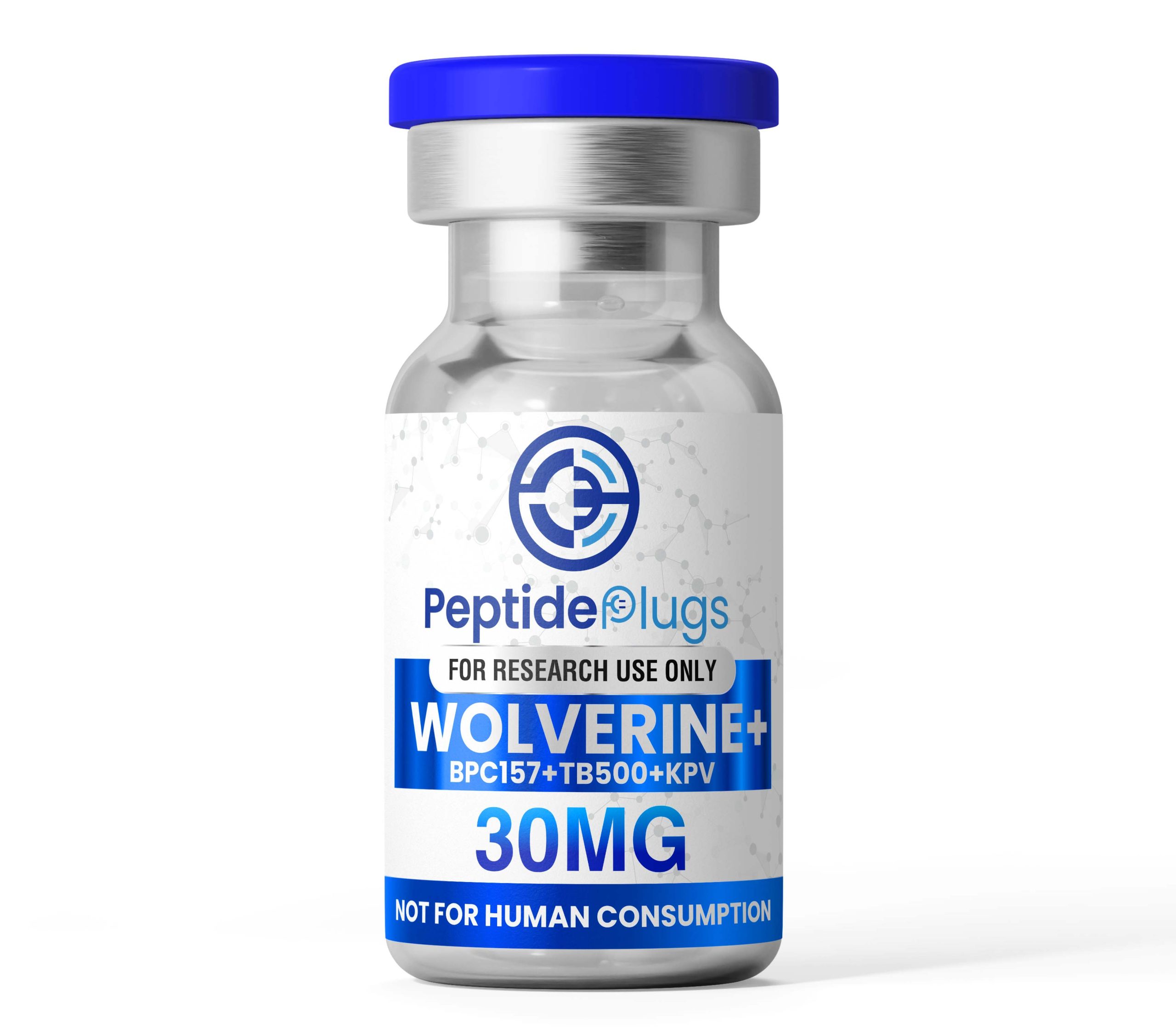
The same repair-and-calm pairing with TB-500 added for cell migration and systemic repair. The complete three-peptide vial for research that reaches past the local site.
Shop Wolverine Plus →About the Pairing
BPC-157 and KPV are an unusually natural match because they come from the same neighborhood. BPC-157 is derived from a protein in gastric juice, and the earliest and deepest part of its literature is gastrointestinal: ulcer models, intestinal anastomosis, gut-lining integrity. KPV's strongest research base is also the gut, where it has been studied in models of intestinal inflammation. Put together, one peptide is associated with rebuilding damaged tissue and the other with quieting the inflammatory signaling that keeps tissue from rebuilding. That is the logic of the pairing in the Wolverine Plus formula, and this blend isolates it: the two gut-rooted peptides, with the repair signal leading, and nothing else competing for the vial.
Research Context
Both peptides have their own body of preclinical research, and the two bodies are not the same size. BPC-157 has been studied since the 1990s and carries one of the deepest literatures of any research peptide, nearly all of it in animal models. KPV is more recently characterized, with most of its data from inflammatory, gastrointestinal, and skin models in cell culture and animals. Neither is FDA-approved for human use, and no published data exists on this specific two-peptide formulation at this ratio. Researchers using this blend are operating ahead of the formal evidence base on the combination itself, even though each individual peptide has its own established literature.
Stacking Notes
This blend is designed as a complete two-peptide repair stack and is most often run on its own. Researchers extending it most commonly add TB-500 for the systemic cell-migration arm, which recreates the Wolverine Plus combination with a much heavier BPC-157 share. Others add GHK-Cu when the design reaches skin and collagen, which moves the formulation toward KLOW territory. No published data exists on this blend combined with other compounds.
Storage
Store the lyophilized product refrigerated and away from light. Keep sealed and protected from moisture until use. After reconstitution, keep refrigerated and use within the period indicated on the product label. Do not freeze.
- 30mg BPC-157 + 20mg KPV
- 50mg labeled, 54.8mg tested
- 99.68% purity, all three samples
- Two-mechanism repair research blend
- BPC-led 3:2 split
- Three times the BPC-157 of Wolverine Plus
- Largest KPV share of any PeptidePlugs blend
- $90 per vial, $145 as singles
- Single reconstitution, single draw
- Component-tested: LC-MS identity, HPLC-UV purity
- Endotoxin, microbial, and heavy-metal screened
- COA available on product page
- Custom blended, only from PeptidePlugs
- Not FDA approved
- Lyophilized for shelf stability